The Previous Tenant Still Has a Key
Every rental comes with a crowd of invisible roommates: the last tenant, the tenant before that, the cousin who borrowed a key, the dog walker from three leases ago. Unless the locks were changed, every one of them can still let themselves in. Texas lawmakers took that problem seriously enough to write it into state law in remarkable detail.
The rules live in Subchapter D of Chapter 92 of the Texas Property Code, which starts at Section 92.151 and covers security devices in residential rentals. Most states leave locks to general habitability rules. Texas names the hardware, assigns the cost, sets deadlines, and spells out what a tenant may do when a landlord drags their feet.
This is general information, not legal advice. The statute has exceptions and conditions that matter in individual cases, and it has been amended over the years. Before you act on a dispute, read the current text on the Texas Legislature’s statutes site or talk to a lawyer or a tenant advocacy group.
The Hardware List in Section 92.153
Section 92.153 is the heart of the law. It requires a landlord to equip a dwelling, at the landlord’s expense, with a specific set of devices, and the requirement applies without the tenant having to ask, subject to exceptions spelled out in the section. Here is the list in plain terms.
French doors get their own rule. One door of the pair must meet the standard requirements, and the other must have specified bolts at the top and bottom or bolts operated from the edge of the door. A separate section, 92.154, sets mounting-height, strike-plate, and bolt-throw standards, so a dead bolt that technically exists but barely catches the frame may still fall short.
If a required device is missing, Section 92.157 lets the tenant ask for it, and the landlord must install it at the landlord’s expense. In other words, a missing door viewer is not a quirk of an older building. It is a gap the owner is obliged to fill.
- A window latch on each exterior window.
- A doorknob lock or keyed dead bolt on each exterior door.
- A keyless bolting device and a door viewer on each exterior door.
- A pin lock on each exterior sliding glass door.
- A handle latch or security bar on each exterior sliding glass door.
Seven Days to Rekey After a Move-Out
Section 92.156 handles the invisible roommates. A landlord must rekey or change the security devices at the landlord’s expense no later than the seventh day after each tenant turnover date. The deadline runs from the turnover, not from the new tenant’s complaint, so a renter shouldn’t have to ask.
A 2015 amendment, House Bill 2404, added a wrinkle about cost. When a tenant leaves in breach of the lease, a landlord may deduct the rekeying cost from that tenant’s security deposit only if the lease includes a provision authorizing it that is underlined or printed in bold. Fine print isn’t enough; it has to be conspicuous.
For a new tenant, the practical move is simple. Ask the property manager, in writing, when the locks were last rekeyed. A good manager will have a date and a work order. If the answer is vague, you now know which section of the Property Code to mention in your follow-up email.
Seven days can feel generous when you are the one sleeping behind the door. Nothing stops a tenant from asking for the rekey to happen before move-in, and many managers schedule it during the make-ready work anyway, alongside paint and carpet cleaning. If you are moving in on a tight timeline, put that request in writing with your application, and ask whether mailbox keys, gate remotes, and amenity fobs were collected from the last resident too. The statute speaks to security devices on the dwelling; those other keys are a matter of good management.
The deadline runs from the turnover, not from the new tenant’s complaint.
When the Landlord Doesn’t Comply
The remedies are where Texas law has teeth. Under Section 92.164, if a landlord fails to install a required device or rekey as Section 92.153 or 92.156 requires, the tenant may install or rekey the device and deduct the reasonable cost from the next rent payment.
The tenant may also serve a written request for compliance and, if the landlord has not complied by the third day after receiving it, terminate the lease without going to court. Or the tenant can file suit and ask for a court order directing the landlord to comply, plus actual damages, a civil penalty equal to one month’s rent plus a fixed additional sum set in the statute, court costs, and attorney’s fees.
A companion section, 92.165, offers a similar set of remedies when a landlord ignores other tenant requests to rekey, repair, or replace devices, and Section 92.161 says those requests must be handled within a reasonable time. Two cautions apply. The remedies generally assume the tenant is current on rent, and a 2015 amendment gave landlords a defense when rent was past due at the time of the request. And deduct-from-rent remedies go wrong easily, so keep receipts, copies, and dates.
What Landlords and Property Managers Should Take From This
For owners, the law is less a threat than a checklist. A turnover routine that includes rekeying, a quick check of every window latch and sliding door pin, and a written record of each job takes care of most of the risk. The record matters. If a dispute ever reaches a justice court, a dated work order is worth more than anyone’s memory.
Larger properties can go further. Apartment communities often pair the required hardware with access control at gates and amenity doors, cameras covering parking and package rooms, and electronic locks that can be rekeyed without a locksmith visit. Our multi-family security work usually starts with exactly that turnover problem.
Single-family rentals benefit from the same thinking at a smaller scale. Smart locks with codes that can be deleted at move-out don’t replace the statute’s rekeying duty for keyed locks, but they make it far easier to know who can get in on any given day.
Going Beyond the Legal Minimum as a Renter
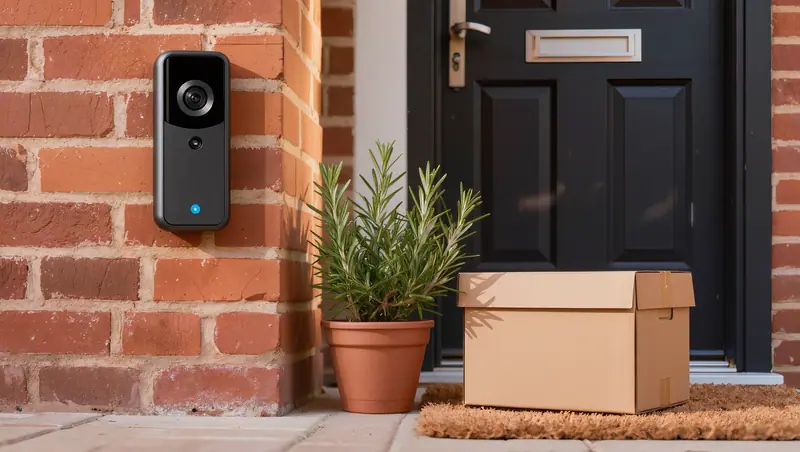
The statute sets a floor. It requires a dead bolt, not an alarm. Plenty of renters want more, and most of it can be done without drilling into anyone’s walls. Wireless sensors, a self-contained siren, and a video doorbell can all go up, and come down again at move-out, with little or no damage to the unit.
Ask first. Many leases restrict alterations, and some limit changing or adding locks without the landlord’s consent. A short written request that explains what you’d like to add, how it mounts, and that you’ll restore the unit at move-out usually gets a yes. Keep the reply with your lease, and photograph the walls before and after so the deposit conversation at move-out is short.
If you’re weighing a monitored system for a rental, our article on how burglars choose a house explains why visible alarms and locked sliding doors matter more than most people expect, and our guide to vetting a Texas security company covers the license to look for before anyone installs anything.
A Move-In Checklist Built From the Statute
Walk the unit on move-in day with the list from Section 92.153 in hand. Try every window latch. Look through each door viewer. Throw each dead bolt and keyless bolting device and make sure it seats firmly in the frame. Check that sliding glass doors have both a pin lock and a handle latch or security bar.
Write down anything missing or broken, photograph it, and send the list to the landlord in writing the same week. Ask for the date the locks were rekeyed. That short email puts the landlord on notice, starts the clock on the request, and gives you a paper trail if you ever need the remedies above.
If you’d like a second set of eyes, a free security assessment works for renters and landlords alike. We’ll check the doors and windows against common sense as well as the statute, and suggest what can be added without risking your deposit.
Straight answers
Questions readers ask
What security devices must a Texas landlord provide?
How soon must a Texas landlord rekey after a tenant moves out?
What can a tenant do if the landlord won’t rekey or install required locks?
Can a landlord charge a former tenant for rekeying?
Can I install my own security system in a Texas rental?
Sources & methodology
Figures are the most recent we could verify from the publishers below, checked October 2026. Where an official agency publishes nothing more recent, we say so rather than estimate.
- 1.Texas Property Code Section 92.153, Security Devices Required Without Necessity of Tenant Request — FindLaw, current
- 2.Texas Property Code Chapter 92, Subchapter D, Security Devices — Justia, current
- 3.Texas Property Code Section 92.164, Tenant Remedies for Landlord’s Failure to Install or Rekey Certain Security Devices — FindLaw, current
- 4.Texas Property Code Section 92.161, Compliance With Tenant Request Required Within Reasonable Time — Texas Public Law, current
- 5.Texas Property Code Section 92.165, Tenant Remedies for Other Landlord Violations — Texas Public Law, current
- 6.H.B. No. 2404, 84th Legislature (enrolled), amending Property Code Section 92.156 — Texas Legislature Online, 2015
- 7.S.B. No. 1367, 84th Legislature (enrolled) — Texas Legislature Online, 2015
- 8.Locks and Other Security Devices — Austin Tenants Council (via TexasLawHelp.org), 2025