Two Jobs for Every Lens: Discourage, Then Document
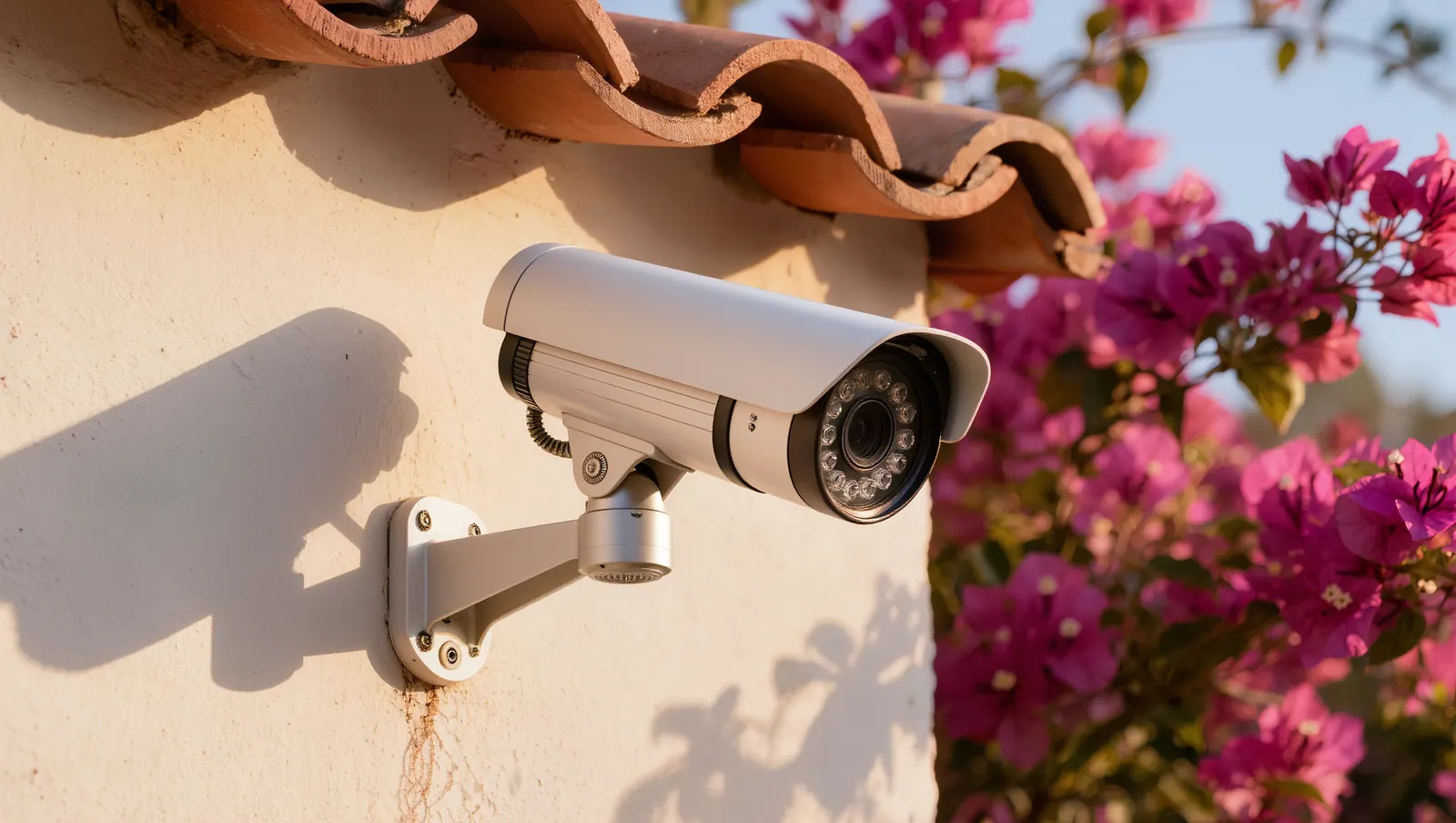
A home camera does two separate things, and a good layout serves both. The first is deterrence. A visible lens tells someone casing the street that this house keeps records. The second is evidence. When something does happen, the recording should show who came, when they arrived, what they touched, and which way they left.
On the first job, there is some evidence. In a 2012 survey of 422 incarcerated burglars conducted through UNC Charlotte, nearly 60 percent said cameras or other surveillance would factor into their choice of target, and more than 40 percent said it would push them toward a different house. Self-reported, yes. But consistent with the idea that people who steal for a living dislike being filmed.
The second job is where most systems fall down. Deterrence works with a dummy. Evidence needs resolution, the right angle, enough light, and footage that is still there a week later when you finally notice the bike is gone. It also needs someone to react in the moment, which is why cameras pair so well with a monitored home security system that calls for help while the lenses take notes.
Where the Footage Lives: A Recorder, the Cloud, or Both
A network video recorder, or NVR, is a small box with hard drives that sits in a closet and records your cameras around the clock. It doesn’t depend on your internet upload speed, and you can scroll back through days of continuous video. Its weakness is physical: a burglar who finds it can carry it out the door.
Cloud recording sends clips off-site as they happen. If the house is ransacked, the evidence is already elsewhere. The tradeoffs are bandwidth and completeness. Most cloud setups record events rather than every second, and a home connection with a weak upload speed can choke on several high-resolution cameras at once.
For most houses we suggest a hybrid. Cameras record continuously to a recorder tucked somewhere unobvious, and the important events also go to the cloud. You get the long timeline and the off-site copy. We’ll test your upload speed during the assessment instead of guessing, and we’ll tell you honestly if your connection can’t carry the plan.
Night Vision and the Problem of the Glowing Black Rectangle
Car prowls, porch visits, and late-night fence hopping tend to happen in the dark, which is exactly when cheap cameras fail. Most cameras switch to infrared at night. They light the scene with invisible IR and record in black and white. That works well up to a point, then falls off sharply. A spec sheet’s night range assumes a clear, flat field, not a carport with a white truck reflecting the glare back at the lens.
Color night vision uses a more sensitive sensor, and sometimes a small white light, to keep color after dark. Color helps more than people expect. “Blue sedan, gray hoodie” is a better report than “dark car, dark shirt.” The visible light has a side benefit, too. A person who walks up the drive and suddenly finds himself lit, on camera, tends to reconsider his evening.
Two habits ruin night footage. One is mounting a camera beside a bright porch light, which blinds it. The other is aiming through a window, which bounces infrared straight back. We design the lighting with the cameras, and sometimes the best fix is a motion-activated floodlight rather than a pricier camera.
The Driveway Matters More Than the Birdbath
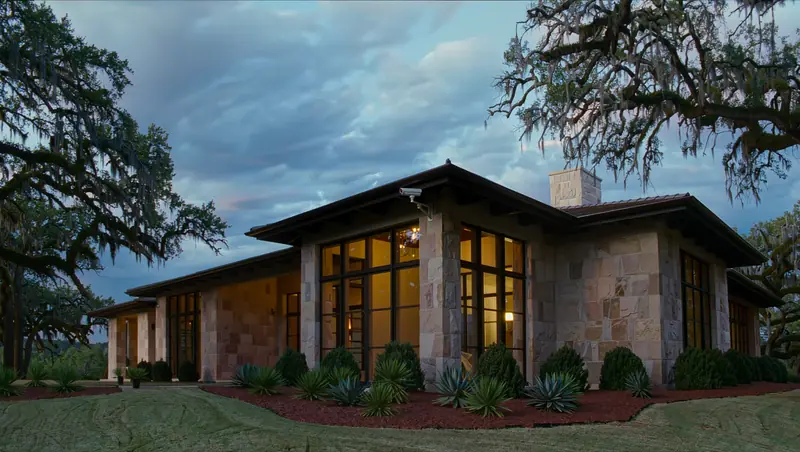
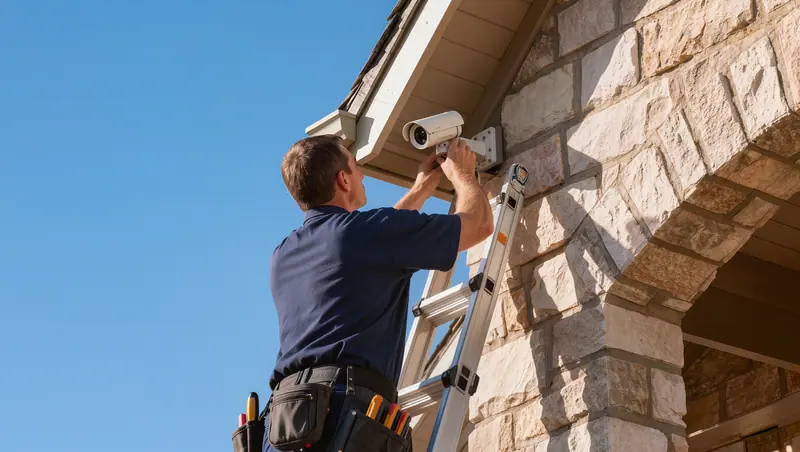
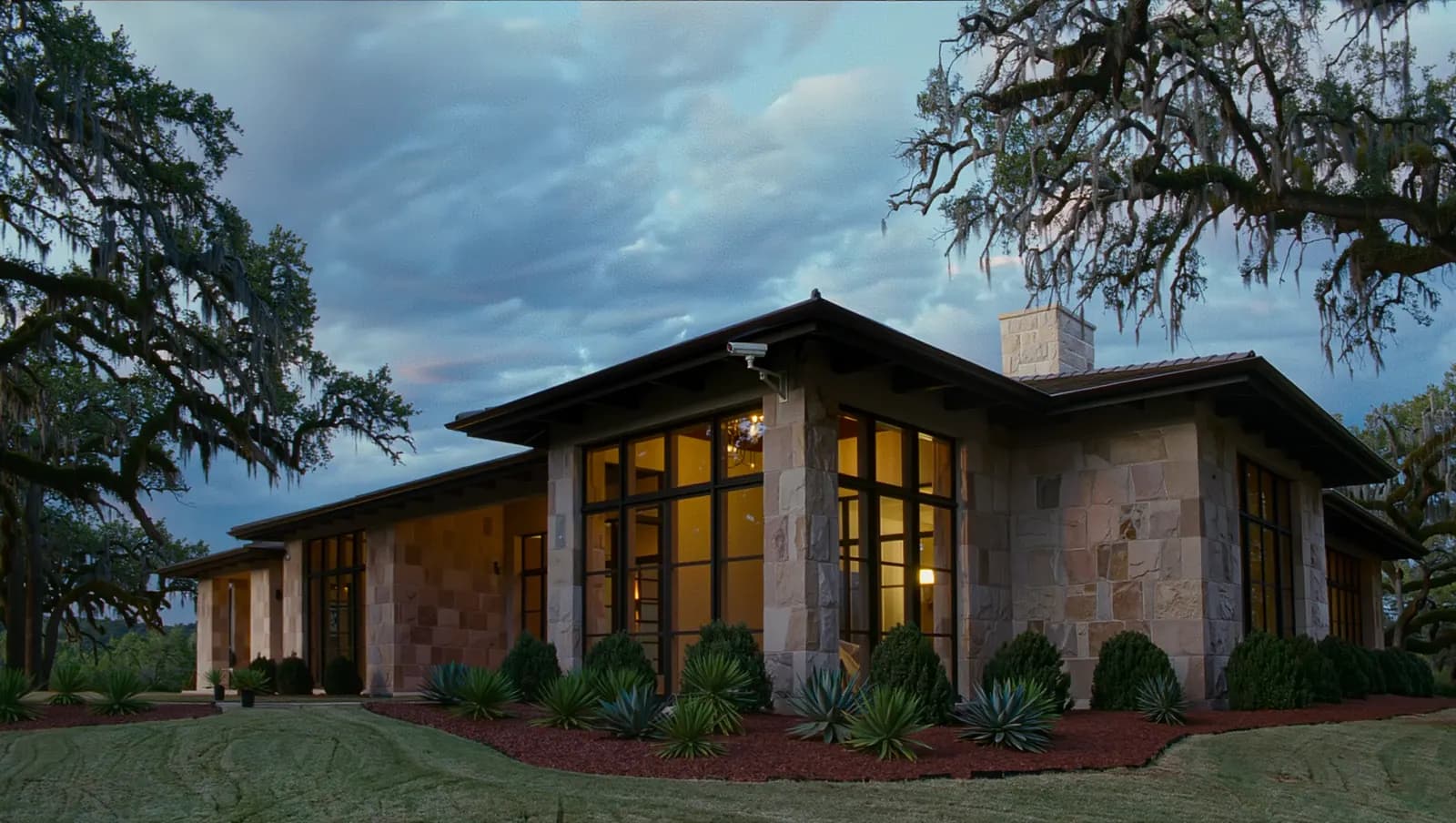
Start with the approaches, not the views. Every route a person takes to a door should cross at least one camera at face height or a little above, roughly eight to ten feet. Corners of the house cover two sides at once. A camera watching the driveway at an angle can catch plates. A camera high under the eave catches the top of everyone’s head.
Vehicles deserve their own lens. Car break-ins and catalytic converter thefts often happen in driveways at night, and a camera aimed down the length of the driveway records far more useful detail than one pointed at the street. Our article on vehicle burglary and catalytic converter theft covers the rest of that problem.
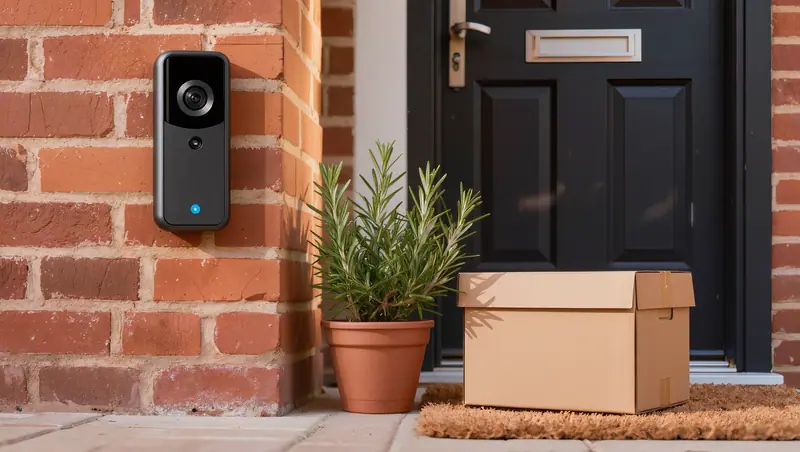
The front door usually goes to a video doorbell, which sees the visitor at eye level. Cameras then cover the side gates, back patio, and garage. In older, close-set neighborhoods like King William, we also pay attention to what a camera can see over the fence, because a neighbor’s backyard is not your evidence.
- Cover every path to every door, at face height
- Give the driveway its own camera, angled for plates
- Keep porch lights out of the frame
- Never aim a night camera through glass
- Mask out neighbors’ windows and yards
Cameras on a West Wall in a Sixty-Day Summer
In 2023, San Antonio logged its 60th day of 100 degrees or more by late August, breaking the old yearly record of 59 set in 2009. A camera on a west-facing brick wall sits in the sun all afternoon, and its housing gets hotter than the air. Check a camera’s rated operating temperature before you buy it, and favor shaded mounting spots when the view allows.
Battery-powered cameras suffer most. Lithium-ion batteries lose capacity faster when they are kept hot and fully charged, which describes a Texas eave in July. Wired power over Ethernet avoids the problem and survives a dropped Wi-Fi signal. Storms bring their own trouble, so we use outdoor-rated cable, sealed connections, and surge protection on the recorder.
One more Texas note: what you record has legal limits. Pointing a camera into a neighbor’s bathroom window is a crime, not a security strategy. Our plain-English guide to Texas security camera laws covers audio, privacy, and shared fences. If you want cameras to do more than watch, such as turning on lights when they spot a person, that lives in smart home automation.
Start with the approaches, not the views.
Ideal for
- Homes with driveway or street parking
- Properties with alleys, greenbelts, or side gates
- Homeowners who travel and want to check in remotely
- Families who want records of deliveries and visitors
- Anyone who has had a car prowled or a package taken