The Trouble With Brass Keys Is That They Never Really Leave
A metal key is a promise that whoever holds it will never lose it, never copy it, and never quit in a bad mood. That is a lot to ask of a seasonal hire. The words stamped on the bow asking people not to duplicate it are a polite suggestion that some key-cutting counters honor and some don’t. Every business owner who has rekeyed a building after a messy departure knows the feeling: you paid to fix a problem you will never be sure you had.
Electronic access control swaps keys for credentials. A card, a fob, a phone, or a PIN goes to each person, and the system decides which doors that credential opens and when. Lose a card, and you cancel it from a laptop before the coffee is cold. Hire someone, and they are set up the same afternoon. The doors are still doors. The difference is that you finally know who can open them.
Access control is not only for glass office towers. Small clinics, churches with many volunteers, gyms with early members, contractors with a tool room, and property managers with a pool gate all have the same problem in different sizes. A two-door system in a Stone Oak medical suite runs on the same principles as a campus with forty readers.
You paid to fix a problem you will never be sure you had.
What’s Actually on the Wall: Readers, Controllers, and Locks
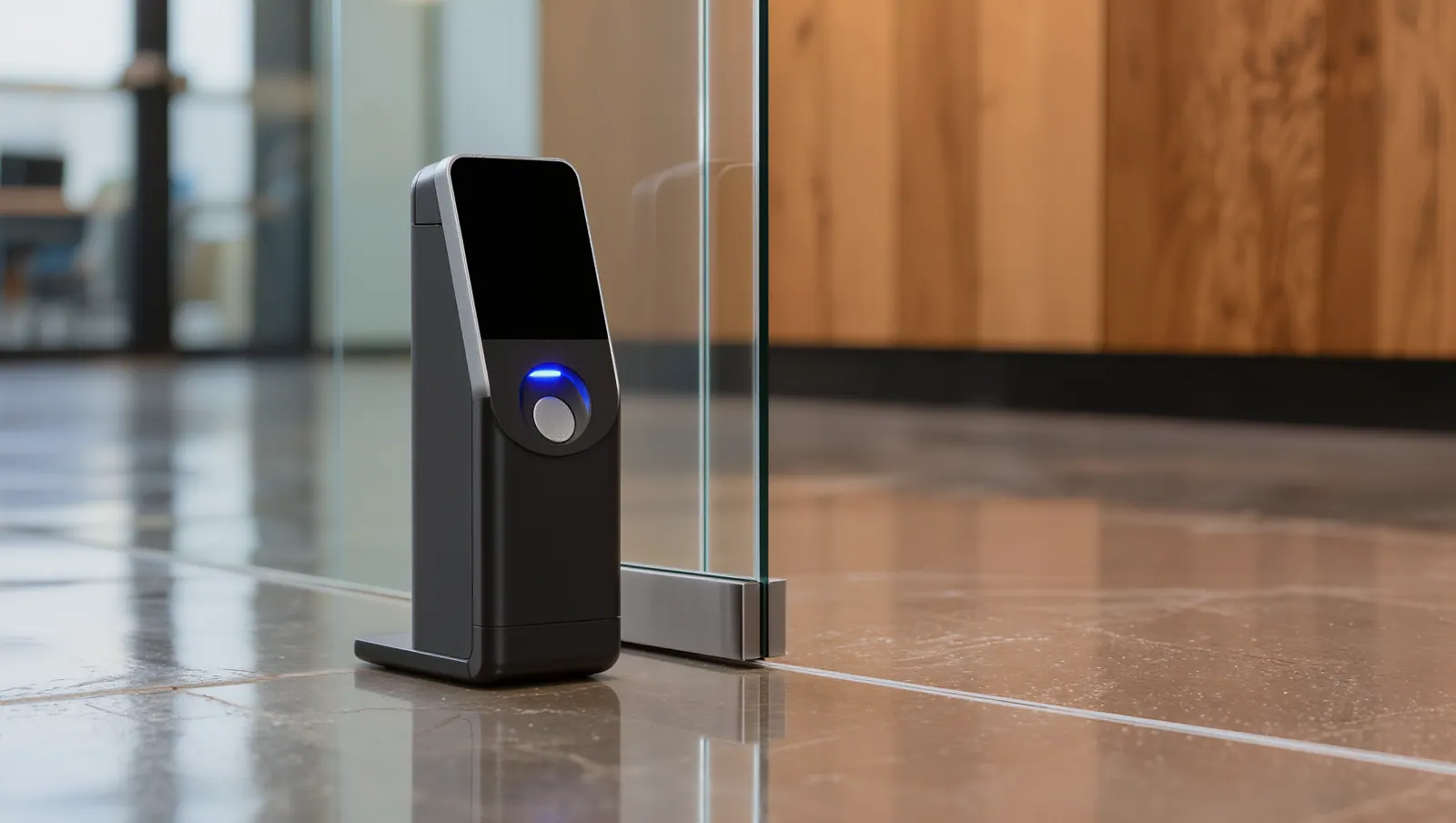
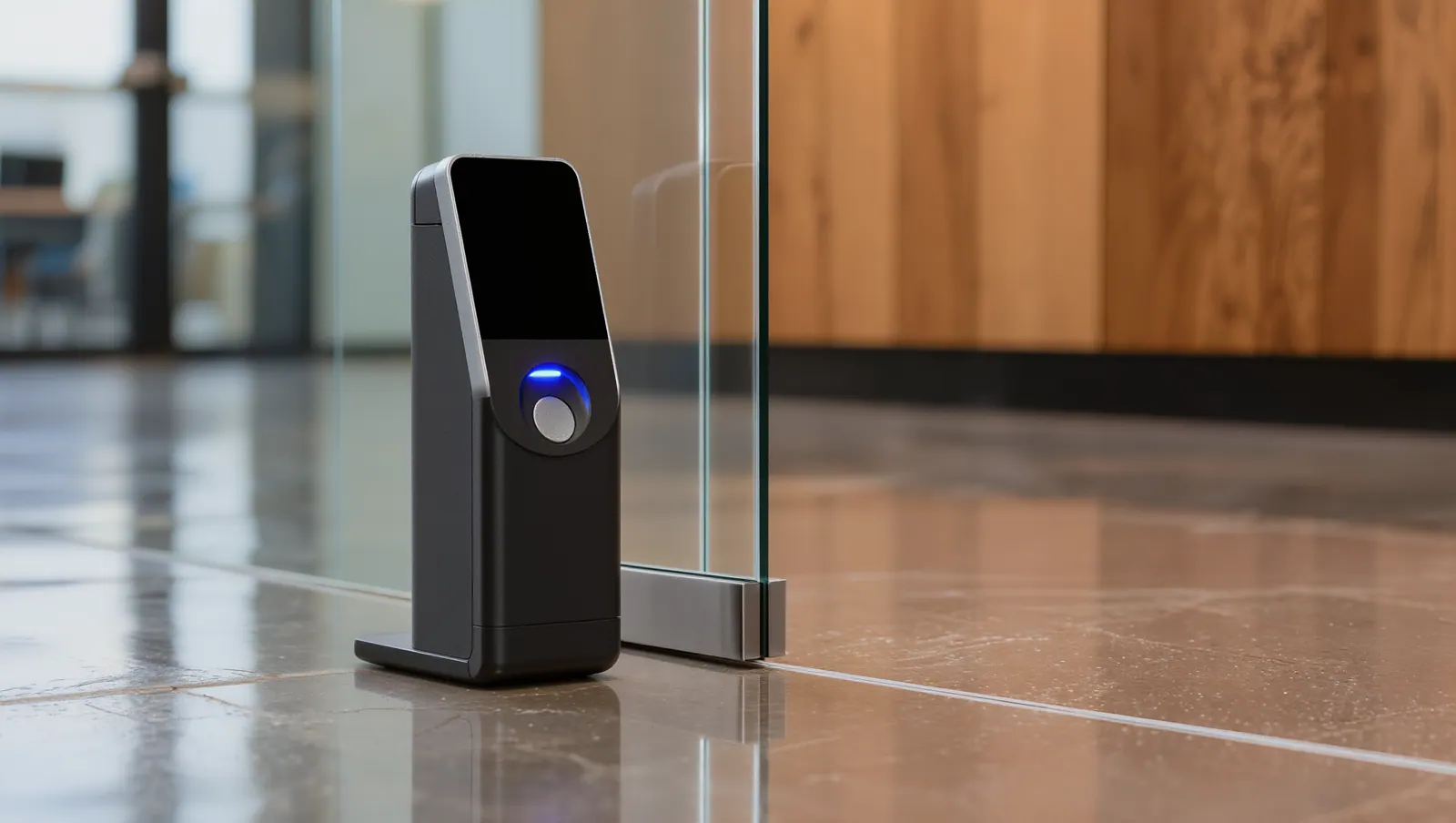
Each controlled door has a reader outside, where people present a credential. The reader passes that information to a door controller, the part that decides yes or no, usually mounted in a locked closet or above the ceiling. The controller then releases the lock. Electrified hardware comes in a few flavors: electric strikes that let the latch pass, electrified lever sets, and magnetic locks that hold the door with an electromagnet. Each fits different doors, frames, and fire ratings.
Two quieter parts matter just as much. A door position switch tells the system whether the door actually closed, which is how you get alerts for a door propped open with a trash can. A request-to-exit device, such as a motion sensor or a push bar, tells the system that someone is leaving from the inside, so the exit doesn’t register as a forced entry.
Safe exit is not optional. Building and fire codes require that people can get out without a key or special knowledge, and certain locking hardware must release when the fire alarm activates. That is why a magnetic lock thrown up by an amateur is a liability rather than a bargain. We design each opening for safe egress and coordinate with the fire alarm and monitoring side where codes call for it. The local fire code official has the final say.
Cards, Fobs, Phones, and PINs: Picking a Credential That Holds Up
Not all credentials are equal. Many older low-frequency proximity cards can be copied with inexpensive readers sold openly online, because the card simply announces its number to anything that asks. Newer encrypted smart credentials make that much harder. If you are installing a system today, there is little reason to choose the older technology, and if you already have it, an upgrade path is worth discussing.
Mobile credentials put the badge on an employee’s phone. People forget cards; they rarely forget phones. They also can’t lend a phone credential as casually as they hand a fob to a coworker who left theirs in the truck. PIN pads still have a place, usually as a second factor on a sensitive door, but a PIN on its own tends to become common knowledge within a week.
The right mix depends on who uses the building. A small office may run happily on fobs. A clinic might add a PIN to the medication room. A property with many residents may prefer phones so management can issue and cancel access without handling plastic at the leasing desk. Whatever you choose, plan for the day a credential gets lost, because that day always comes. For more on matching hardware to a building, see our overview of commercial security services.
Schedules and Audit Trails Do the Boring Work So You Don’t Have To
Schedules are where access control starts saving time. The front door unlocks at 7:30 on weekdays and locks at 6:00. The loading door opens only during receiving hours. Holidays override the usual pattern. A first-person-in rule keeps the scheduled unlock from happening until a manager actually badges in, so on an ice-day closure the lobby doesn’t sit unlocked for a building with nobody in it.
The audit trail is the other half. Every granted entry, denied attempt, forced door, and door held open too long is logged with a time and a name. When a laptop goes missing from a conference room, you can see who badged into that suite between lunch and three. Combine door events with commercial video surveillance and you can jump straight to the footage for any entry instead of scrubbing through hours of recordings.
Access control also pairs naturally with an intrusion alarm for your business. The first valid credential of the morning can disarm the alarm area it unlocks, and the last person out can arm it on the way through the door. Fewer codes to remember means fewer false alarms caused by fumbling at a keypad.
Mistakes That Turn a Card Reader Into Decoration
A card reader is only as good as the door it controls, and most failures are ordinary. Doors that don’t latch because the closer was never adjusted. Controllers mounted in an unlocked utility room where anyone can reach the wiring. Power supplies with no battery backup, so a storm outage leaves doors either locked tight or wide open, depending on the hardware. Credentials for former employees that nobody remembered to delete.
Most of these are fixed with design and upkeep rather than more equipment. We set lock behavior on purpose, decide which doors fail secure and which fail safe, put batteries where they belong, and give someone on your staff a simple routine for adding and removing users. For older installations, service and maintenance visits catch sagging doors and tired batteries before they become a weekend emergency.
Ideal for
- Professional offices and multi-tenant suites
- Medical and dental clinics with restricted rooms
- Warehouses with loading doors and tool cages
- Churches, schools, and nonprofits with many volunteers
- Gyms and studios with early or late member hours
- Apartment communities, HOAs, and amenity spaces
- Server rooms and IT closets