February 2021 Taught San Antonio What a Pipe Is Worth
The National Weather Service office for Austin and San Antonio described February 10 to 18, 2021, as an unprecedented and historic eight-day stretch of winter weather in South-Central Texas. KSAT reported that San Antonio logged about 107 hours below 33 degrees in that storm, the one most people now call Winter Storm Uri, just short of a record set in 1951. Power went out across the city, and water pressure sagged with it.
What followed was a citywide lesson in plumbing. Pipes that had never been tested by that much cold split in attics, exterior walls, and garages. San Antonio went under a boil-water notice, and statewide, Texas regulators estimated that about 8.7 million people were under boil-water notices at one point, according to NPR. Many owners didn’t find their leaks until water pressure came back, or until they returned from wherever they had gone to stay warm.
A freeze sensor would not have kept the power on. It would have told you the house was dropping toward freezing while there was still time to drip faucets, open cabinet doors, or shut off the main. A water sensor would have told you the moment a pipe let go. Our article on winter storm lessons for freeze and water monitoring goes deeper into what worked and what didn’t.
A freeze sensor would not have kept the power on. It would have told you while there was still time.
Smoke Detectors That Call Someone Instead of Just Beeping
A battery smoke alarm does one job: it makes noise for whoever is inside. That is essential, and it should stay. But a house fire at 2 p.m. on a workday, or in a warehouse on a Sunday, has no audience. A monitored smoke detector sends a signal through your security system to the central station, and an operator requests the fire department. The difference is minutes, and in a fire, minutes decide whether you have a damaged kitchen or a vacant lot.
Heat detectors handle places where smoke detectors misbehave. Kitchens, garages, attics, and laundry rooms produce steam, dust, or exhaust that set off a smoke sensor for no good reason. A heat detector responds to a temperature threshold or a rapid rise instead. Using the right sensor in each spot gives you real coverage without the household habit of pulling the battery out of the alarm that keeps chirping over the toaster.
Monitored life-safety sensors connect to the same panel as your home security system or business alarm and report through the same 24/7 alarm monitoring path. Fire signals get priority handling, because no sensible procedure puts a fire on hold. One keypad, one app, and one account cover burglary, smoke, and carbon monoxide, which also means one place to update when your phone number changes or a contact moves away.
Carbon Monoxide Tends to Show Up When the Power Goes Out
Carbon monoxide has no color and no smell, and its early symptoms resemble the flu. Gas furnaces, water heaters, fireplaces, and cars idling in an attached garage can all produce it. In this part of Texas, where most heating systems run hard only a few weeks a year, a furnace can sit unused for months and then fire up with a problem nobody had a reason to notice.
Outages make it worse. When power fails during a cold snap, people reach for generators, grills, and gas appliances, and some of them end up in the wrong place: a garage with the door half open, a patio next to a window, a living room. A monitored carbon monoxide detector reports to the central station and to your phone, so the alarm reaches someone even if the people inside are already drowsy or asleep.
Water and Freeze Sensors: Small Devices, Very Large Leaks
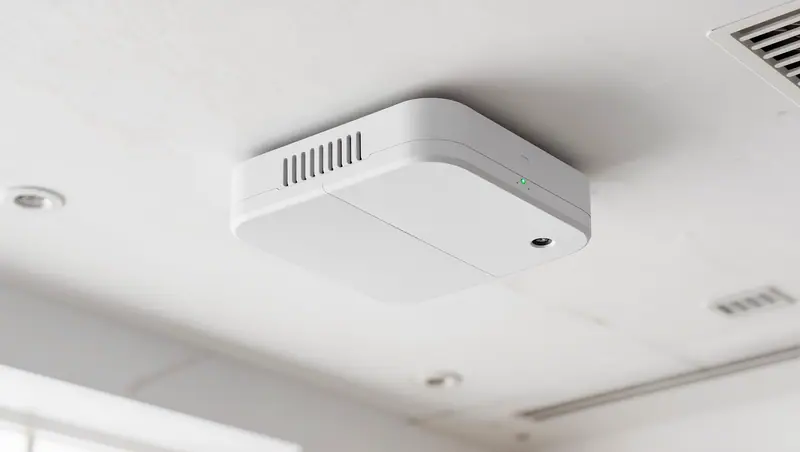
Most water damage begins somewhere quiet. The usual suspects in San Antonio homes include water heaters in garages and attics, washing machine hoses, the supply lines under sinks and toilets, ice maker lines, and the air conditioner’s condensate pan, which can overflow during a humid summer when the drain line clogs. A water sensor in each of those spots costs little effort and sends an alert the moment it gets wet.
Freeze sensors belong where cold arrives first: exterior walls with plumbing, unheated garages and utility rooms, crawl spaces, and any building that sits empty in winter. They are especially useful for vacation homes, like a weekend place near Canyon Lake, and for rental units between tenants. Pair them with an automatic water shutoff valve through smart home automation, and a leak alert can also close the main.
For businesses, temperature monitoring protects inventory as much as the building. Restaurants watch walk-in coolers. Clinics and pharmacies watch medication refrigerators. Offices watch the server closet that overheats every August. Alerts can go to a manager, the central station, or both, with thresholds set to match the equipment. A cooler that creeps up a few degrees overnight is a service call. One discovered at the morning shift change is a dumpster full of inventory and a long conversation with the health inspector.
Commercial Fire Alarms Play by a Separate Rulebook
A commercial fire alarm system is a different animal from a few monitored smoke detectors in a home. Requirements come from the building and fire codes your city enforces and from NFPA 72, the National Fire Alarm and Signaling Code, which includes a full chapter on inspection, testing, and maintenance. The local fire code official, the authority having jurisdiction, decides which edition applies and what your building needs.
In San Antonio, commercial locations need separate city alarm permits for fire and for security systems, and permits must be renewed each year. Scheduled inspection and testing is part of keeping a commercial fire system in compliance, and our service and maintenance team handles the routine visits, battery replacements, and repairs. If your building also needs intrusion protection, business security can share the same monitoring account.
Ideal for
- Homeowners who work long hours or travel
- Vacation homes and second properties
- Landlords with rentals and vacant units
- Restaurants with walk-in coolers and freezers
- Clinics and pharmacies with medication refrigerators
- Offices with server rooms or IT closets
- Commercial buildings that need monitored fire alarms