
What Happens in the Forty Seconds After a Door Opens
A monitored alarm is a small relay race. A magnet on the door pulls away from its sensor. The sensor radios the panel. The panel starts an entry delay, the beeping countdown that gives you time to punch in your code. If no code arrives, the panel sounds the siren and sends a coded signal to a central station, usually over a cellular radio built into the panel.
At the central station, an operator sees which zone tripped, in what order, and whether a second sensor followed. A back door and then a hallway motion sensor tell a clearer story than one window. The operator calls the numbers on your list, asks for your passcode, and dispatches police if nobody answers or the person who answers can’t give the right word.
That chain is the whole point. A siren alone mostly informs the burglar that he has company. A siren plus a phone call plus a dispatch turns a noisy house into one with a timer on it. If you want the details of the monitoring side, our page on 24/7 alarm monitoring walks through it.
The Sensors, in Order of How Often People Skip Them
Door contacts are the obvious part, and nearly everyone gets them. The trouble starts with the doors nobody thinks about: the one from the garage into the laundry room, the side gate into the backyard workshop, the sliding door that’s been “meaning to get fixed” since 2019. Every exterior door counts, including the ugly ones.
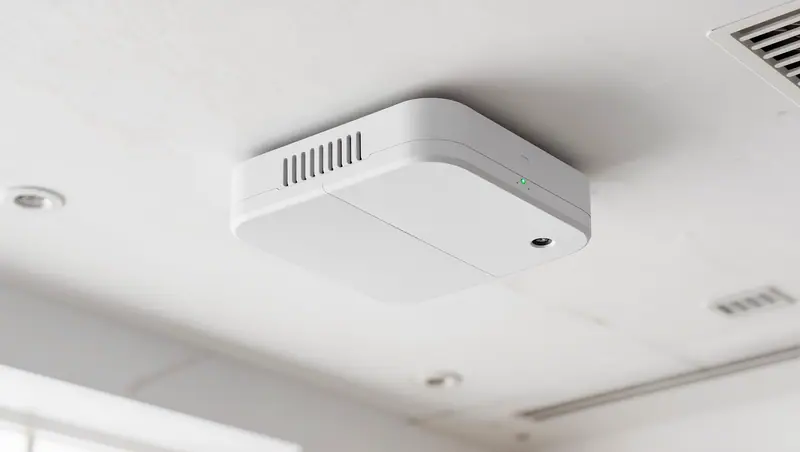
Window contacts come next, and here people economize. In a two-story house you can argue about upstairs windows. In a single-story ranch, every window is a ground-floor window. A glass-break sensor helps here. It listens for the specific sound pattern of breaking glass and can cover a whole room of windows from one spot on the ceiling.
Motion detectors are the backstop. They don’t care how someone got in, only that a warm body is crossing the living room while the system is armed away. Modern units can be set to ignore smaller pets, and placement matters more than the spec sheet. A sensor aimed at a sunny window or an HVAC vent will cry wolf in August.
- Door contacts: every exterior door, plus the garage entry door
- Window contacts: reachable windows, especially at the back of the house
- Glass-break: rooms with large panes or many windows
- Motion: hallways and main rooms an intruder must cross
- Smoke, CO, and water sensors: optional, same panel
Burglars Shop for Houses the Way You Shop for Groceries
In a 2012 survey funded by the alarm industry’s research foundation, researchers led out of UNC Charlotte asked 422 incarcerated burglars how they picked targets. About 83 percent said they would try to find out whether a home had an alarm before breaking in. About 60 percent said an alarm would send them looking for a different house.
Take those numbers with the usual grain of salt. They come from men who were caught, describing what they say they would do. Still, the pattern is consistent with common sense. Most burglars are not safecrackers. They want an easy door, a quiet street, and time. An alarm takes away the time.
That is why visible signs matter: the yard sign, the window decals, the keypad you can see through the sidelight. They advertise the timer before anyone tests it. Our article on how burglars choose a house goes deeper into the selection process, including the parts that have nothing to do with alarms.
A siren alone mostly informs the burglar that he has company. A siren plus a dispatch puts a timer on the house.
Designing for Ranch Houses, Long Commutes, and August
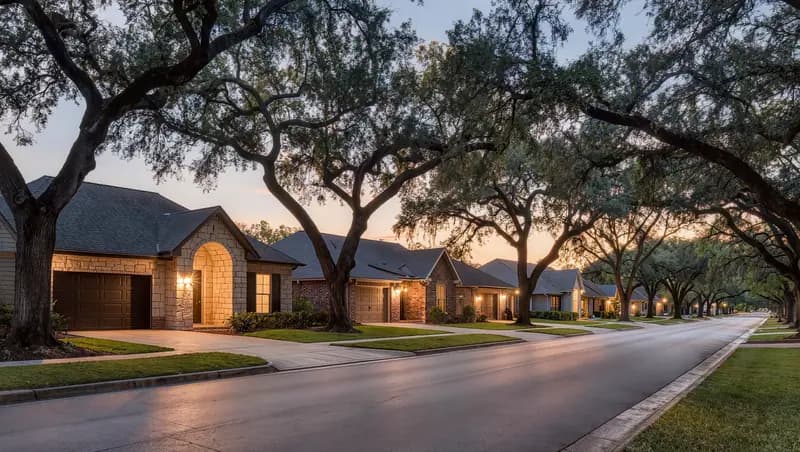
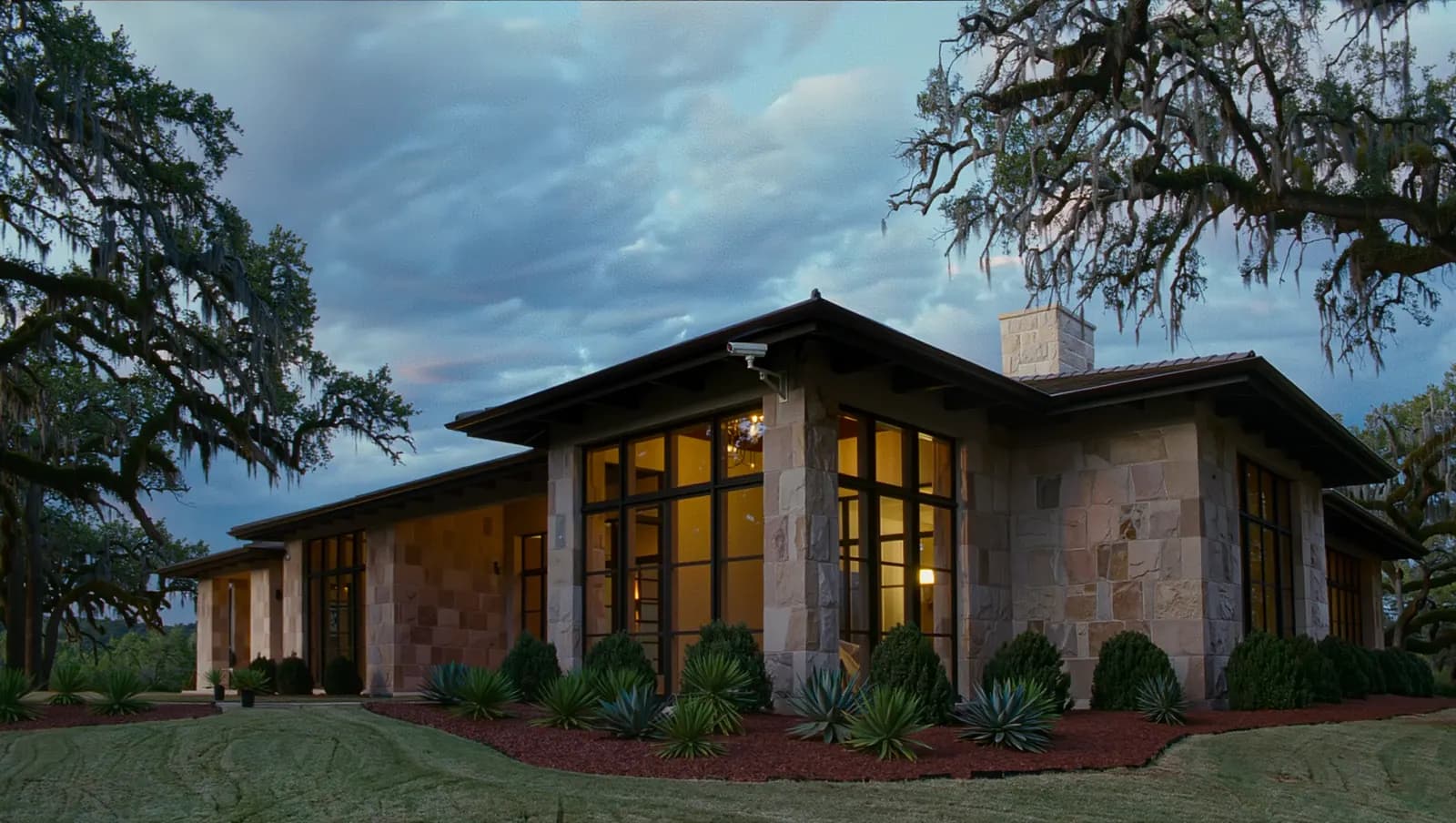
A lot of San Antonio lives in long, low houses: a garage on one end, bedrooms on the other, a back patio facing a greenbelt or an alley. That footprint stretches wireless range and multiplies entry points. In newer subdivisions out by Stone Oak and Alamo Ranch, we also see big rear windows and sliding doors that face an open field, which is lovely until it isn’t.
Then there’s the schedule. If both adults drive Loop 1604 or I-10 to work, the house may be empty from seven to six. Burglars prefer an empty house, and a commuter’s house is empty for eleven hours, so the “away” setting earns its keep while you sit in traffic. The “stay” setting, which arms the doors and windows but not the interior motion, covers the nights.
Weather matters too. Panels mounted in a garage or a hot utility closet age faster, and batteries of nearly every chemistry lose capacity sooner when they bake. We mount equipment in conditioned space when we can. We also plan for storms: a cellular communicator and a charged backup battery keep the system talking when the power drops.
Four Ways a Good Alarm Becomes Wall Decor
The first is skipping monitoring. A local-only siren protects the house about as well as a car alarm protects the car. The second is relying on an old phone line. When the national carriers shut down their 3G networks, plenty of older panels quietly lost their only path to the outside world, and their owners found out later.
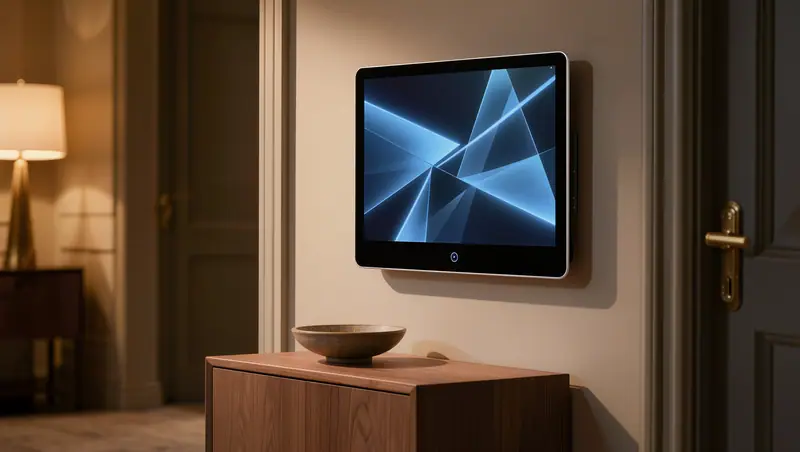
The third is never arming it. Systems that are annoying to use don’t get used. That’s a design problem, not a character flaw, and it is usually fixed with a better keypad, a phone app, or a key fob for the person who always forgets the code. Our touchscreen keypads exist largely for this reason.
The fourth is false alarms. A badly placed motion sensor, a too-short entry delay, or a houseguest without a code will trigger dispatches nobody needed. Cities track those, and repeat offenders hear about it. Read our guide to San Antonio’s alarm permit and false alarm rules before you go live.
Ideal for
- Single-story homes with many reachable windows
- Households that are empty all workday
- Homeowners replacing a dead or unmonitored alarm
- Families who want smoke and CO monitoring on one panel
- New builds on the North Side and far West Side
- Owners of second homes or rentals in the Hill Country