The Week the Faucets Went Quiet
San Antonio does not own many snow shovels. In the middle of February 2021 it found out why that is usually a sensible decision and occasionally a bad one. Snow settled on the live oaks. The power went out in rolling waves, then just went out. And across the city, people turned on the kitchen tap and got a cough of air.
The San Antonio Water System put customers under boil water notices that week. Its leaders said the trouble came mostly from the electricity, not the cold: pump stations lost power for long stretches, and pressure fell in parts of the system. Service came back in stages. After water quality sampling and consultation with the Texas Commission on Environmental Quality, SAWS lifted the last of the notices on February 23.
By then the real story in many homes had moved indoors. A pipe that froze on Tuesday does not announce itself on Tuesday. It waits for the thaw. Then it runs, often in a wall, an attic, or a garage, and often while the family is staying with a relative across town who still has heat.
A Short Statistical History of a Very Long Week
The numbers are sobering, and they deserve to be told plainly. The Texas Department of Insurance described the event as a severe winter storm that hit the state from February 11 to 19, 2021. The storm knocked out power to more than four million customers in Texas. A University of Houston survey later found that almost 70 percent of Texans served by the ERCOT grid lost power during the storm, and almost half had their water service disrupted.
The human cost was heavier than any property figure. The Texas Department of State Health Services eventually counted 246 deaths connected to the storm. About 65 percent involved exposure to extreme cold, including 158 deaths from hypothermia. Any honest conversation about winter preparation starts there: protect people first, then the house.
The house, though, took a beating too. By the Department of Insurance’s count, insurers reported more than 456,000 claims from the storm in 2021, and about four in five of them were for residential property. The department kept collecting data into 2022 as claims matured. Behind each of those claims is a ceiling that came down, a floor that buckled, or a wall that had to be opened to find the leak.
Insurers reported more than 456,000 claims from the storm, and about four in five were for homes.
Why the Damage Shows Up After the Ice Melts
Water expands when it freezes. Inside a pipe, that expansion has nowhere to go, so the pressure builds until something gives, often at a fitting or a weak spot in the pipe wall. While the water stays frozen, the ice itself plugs the crack. Nothing drips. The house looks fine.
Then the sun comes out, the power comes back, and the ice turns to water under full line pressure. A split pipe can pour water into an attic or a wall cavity for hours before anyone sees a stain. In 2021 a lot of Texans were not home to see it at all. They had done the sensible thing and gone somewhere warm.
This is the problem monitoring was built to solve. A burglar is not the only thing that comes into a house while you are away. The difference between a wet floor and a gutted kitchen is usually measured in hours, and the person who finds out first wins. With the right sensors, that person is you.
Freeze Sensors: A Thermometer That Picks Up the Phone
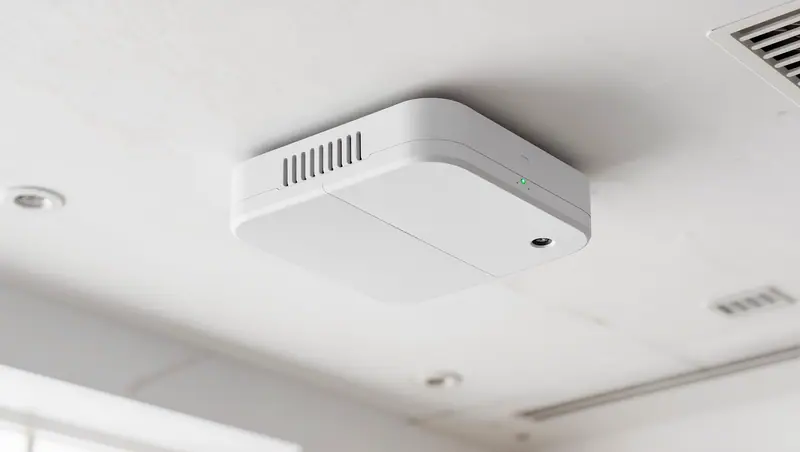
A freeze sensor, sometimes called a low-temperature sensor, watches the air in a room and sends an alert when it drops below a set point. That is the whole trick. Its value is timing. It tells you the house is getting cold while the pipes are still whole, when you can still open cabinet doors, drip faucets, start a generator safely, or call someone to check.
Placement matters more than quantity. Put sensors where the cold arrives first and pipes live: under sinks on exterior walls, near a water heater in the garage, by the laundry hookups, and in any room that tends to run cold. Pair them with smart thermostats and you can also watch indoor temperature from your phone and nudge the heat when the grid comes back.
On a monitored system, a freeze alarm does not just buzz in an empty house. It goes to the 24/7 monitoring center, which calls you and the contacts on your list. For a second home, a rental, or a parent who lives alone, that phone call is the point.
Leak Sensors and Shutoff Valves: The Plumber Who Never Sleeps
Freeze sensors warn. Leak sensors confirm. A water sensor is a small puck that sits on the floor and alarms when its contacts get wet. Put them under the water heater, under sinks, behind the washer, beside the dishwasher and refrigerator, and anywhere a slow drip could go unnoticed. They are cheap insurance against the leak you would otherwise find with your socks.
An automatic shutoff valve goes a step further. It is a motorized valve installed on the main water line. When a leak sensor trips, the valve closes and stops the water to the house. You get the alert and the fix in the same moment, instead of the alert and a long drive home. Some valves can also be closed on command from an app, which is handy when you leave for a week and want the house dry behind you.
Valves and sensors work best as part of one system rather than a drawer of gadgets that each speak a different app. We install them as part of our fire and environmental monitoring, alongside smoke and carbon monoxide detection, and tie them into smart home automation so a leak can trigger the valve, the alert, and a call in one chain.
- Freeze sensor: warns before pipes burst, while you can still act.
- Leak sensor: confirms water is where it should not be.
- Automatic shutoff valve: closes the main line when a sensor trips.
- Central station monitoring: makes sure a human hears about it.
Make Sure It Still Works When the Grid Doesn’t
Here is the uncomfortable irony of 2021. The storm that froze the pipes also took out the power, and the power runs the router. A sensor that reports only over home Wi-Fi goes silent at exactly the moment you need it to talk. That is not a product flaw so much as a design choice made by someone who lives where it does not freeze.
For freeze and water protection to be worth anything in Texas, the system needs three things. Battery backup in the panel and the sensors. A cellular communicator, so alarms reach the monitoring center without the home internet. And batteries that are actually fresh, which is where routine service and maintenance earns its keep. Ask any company you are considering how each device reports during an outage, and get the answer in writing. Our guide to vetting a Texas security company covers the rest of the questions.
None of this replaces common sense. Learn where your main water shutoff is before you need it. Keep a flashlight near it. Know how to turn it by hand. Sensors are fast, but a homeowner who knows the house is faster still.
Before the Next Blue Norther
Texas winters are mild right up until they are not. The next hard freeze will not be the same storm, and it may not be as long. It does not have to be. One night below freezing with the power out is enough to split a pipe in an exterior wall.
Think about who is most exposed. The weekend place at Canyon Lake that nobody checks until spring. The rental between tenants. The house of a parent who would rather not bother anyone. The home you leave every winter for the holidays. Each is a building full of pipes with no one inside to hear them crack. A freeze sensor and a leak sensor in each of those places cost far less attention than a single phone call from a neighbor who noticed water running under the garage door.
There is a paperwork benefit, too. A monitored alarm leaves a time-stamped record of when the temperature dropped and when the water started. If you ever do have to file a claim, that history, along with your photos, helps you tell the adjuster exactly what happened and when. It is not glamorous. Neither is arguing about dates with an insurance company in March.
We can walk your home and show you where the cold gets in, where the water lives, and where a sensor or a valve would do the most good. We have worked across San Antonio and the surrounding communities since 2010, through hot summers and the occasional frozen February. Book a free on-site security assessment and we will build a plan that protects the house while you protect the people in it.
Straight answers
Questions readers ask
What is a freeze sensor, and how is it different from a thermostat?
Will water and freeze sensors work during a power outage?
What does an automatic water shutoff valve do?
Where should leak sensors go in a typical San Antonio home?
Did San Antonio’s water mains freeze during Winter Storm Uri?
Sources & methodology
Figures are the most recent we could verify from the publishers below, checked October 2026. Where an official agency publishes nothing more recent, we say so rather than estimate.
- 1.Commissioner’s Bulletin B-0009-21 (data call on the February 2021 winter storm) — Texas Department of Insurance, 2021
- 2.Report: More than 456.5K Claims Filed in Texas After Winter Storm — Insurance Journal, 2021
- 3.Insured Losses Resulting from the February 2021 Texas Winter Weather Event — Texas Department of Insurance, 2022
- 4.Texas DSHS reports higher death toll from February winter storm — FOX 7 Austin, 2021
- 5.Almost 70% of ERCOT customers lost power during winter storm, study finds — KSAT, 2021
- 6.Safe to drink: All boil water notices lifted for SAWS customers on Tuesday — KSAT, 2021
- 7.Before noon, other huge sections of the city will be out of the boil water notice, SAWS CEO says — KSAT, 2021